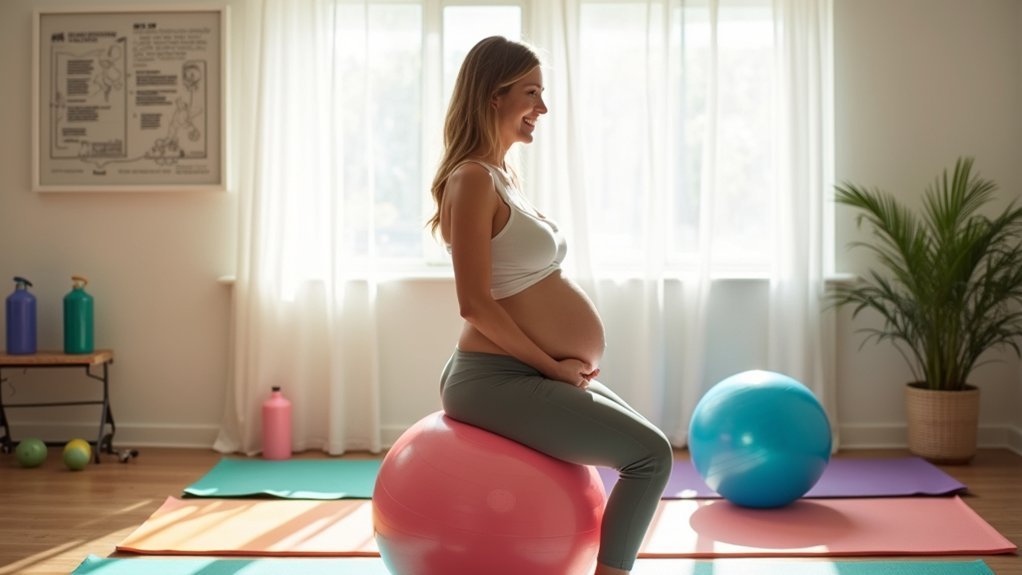
While pregnant, you should approach rebounding with caution. Always get medical clearance first, especially if you have pregnancy complications. Use mini-trampolines with sturdy handles, keep bounces low (1-2 inches), and monitor your heart rate. During the first trimester, focus on gentler movements with one foot grounded; by the third trimester, consider seated bouncing on an exercise ball instead. Proper form protects your changing body and your baby’s safety remains paramount throughout your fitness journey.
Understanding The Benefits of Low-Impact Rebounding During Pregnancy
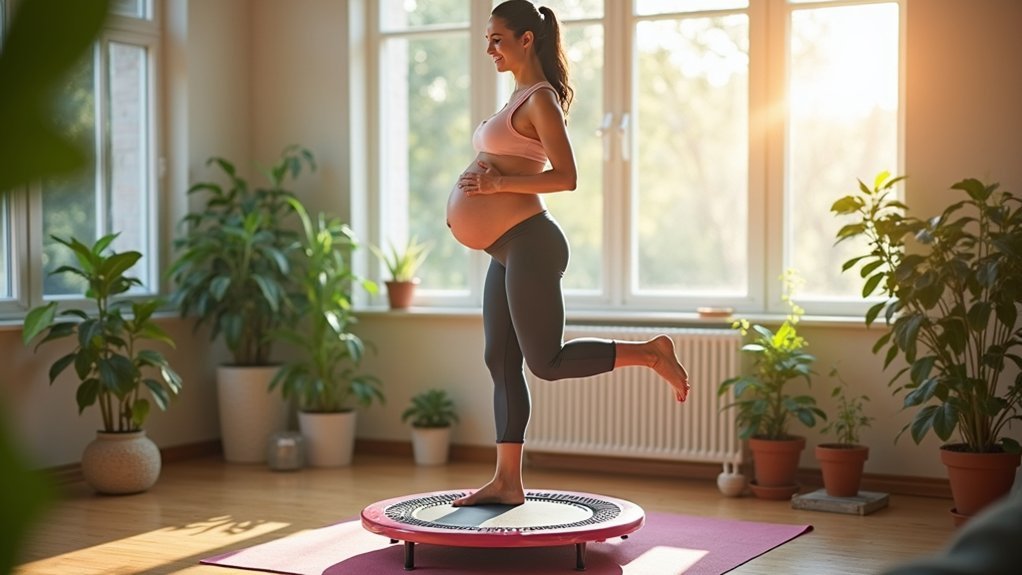
While many exercises become challenging during pregnancy, low-impact rebounding offers a gentle yet effective option for expectant mothers. This exercise minimizes stress on your joints while strengthening your pelvic floor muscles—crucial support during pregnancy and delivery.
When you rebound with gentle movements, you’re improving cardiovascular health without straining your body. The activity enhances blood circulation throughout your system, which benefits both you and your baby. As rebounding is gaining traction among expectant mothers, more pregnancy-friendly routines are becoming available online.
You’ll also appreciate the lymphatic circulation benefits, which help reduce inflammation and support your immune function during this vulnerable time. Many women find rebounding helps with stress reduction and improves balance—important as your center of gravity shifts throughout pregnancy.
Remember to consult your healthcare provider before starting, as individual circumstances vary considerably during pregnancy.
Medical Considerations Before Starting A Pregnancy Bounce Routine
Before incorporating any bounce routine into your pregnancy fitness plan, medical clearance from your healthcare provider is absolutely necessary. This is especially important if you have pre-existing conditions like hypertension or gestational diabetes.
Always consult your doctor before starting pregnancy bounce exercises, particularly with conditions like hypertension or gestational diabetes.
Your doctor will help assess risks associated with activities that could lead to falls or abdominal impact. Bounce videos often involve movements that may cause abdominal trauma, which should be avoided during pregnancy. During different pregnancy stages, you’ll need to adjust your approach—what’s safe in your first trimester may not be appropriate in your third.
Always exercise on stable, non-slip surfaces and use secure equipment. Avoid jerky movements, deep flexion, or excessive stretching due to pregnancy-loosened ligaments.
After your first trimester, don’t stand motionless for prolonged periods.
Remember to stay hydrated, wear comfortable clothing, and exercise in cool environments to prevent overheating.
Pelvic Floor Protection While Using Mini-Trampolines
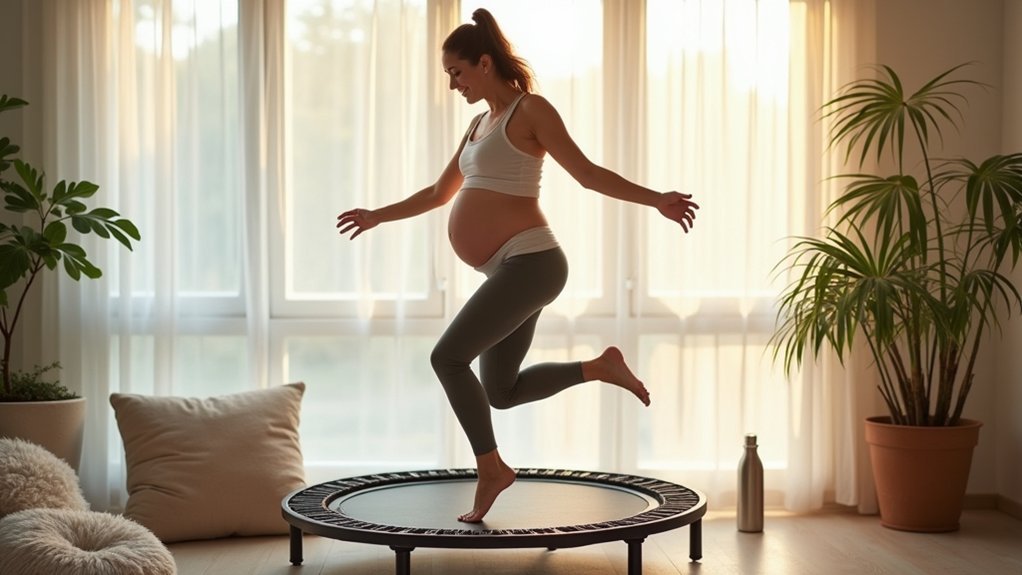
Protecting your pelvic floor becomes essential when incorporating mini-trampolines into your pregnancy exercise routine. Your pelvic floor acts as a mini-trampoline itself, requiring elastic strength to manage pressure during bouncing. During pregnancy, hormonal changes naturally loosen pelvic floor tissues, requiring extra caution with rebounding exercises.
| Safe Technique | Why It Matters |
|---|---|
| Mini-bounces (1-2 inches) | Minimizes downward pressure on pelvic organs |
| Light Kegel during bounces | Provides support to prevent overstretching |
| Neutral spine alignment | Reduces force on pelvic floor tissues |
| 30-60 second intervals | Prevents fatigue and strain |
Always check for symptoms like leakage or heaviness after rebounding sessions. If you experience discomfort, reduce intensity or consult a pelvic health physiotherapist. Remember to incorporate post-workout relaxation through deep breathing and gentle stretching to prevent tension buildup in your pelvic floor muscles.
First Trimester Rebounding Modifications
As your body undergoes significant hormonal shifts during the first trimester, adapting your rebounding routine becomes essential for both safety and comfort.
If you’re already familiar with rebounding, you can generally continue with modifications. Lower your bounce height and focus on gentler movements that keep one foot on the trampoline at all times. Focus on building awareness of the core and pelvic floor relationship while bouncing to maintain proper control.
Start with 5-10 minute sessions, gradually increasing as your body permits. Always maintain proper balance by keeping your core engaged and using handrails if needed.
Begin with brief 5-10 minute rebounding sessions, gradually extending as comfortable. Maintain stability through core engagement and handrail support when necessary.
Stay hydrated and eat a light snack before exercising. Monitor your body temperature and stop immediately if you feel dizzy, overheated, or uncomfortable.
Incorporate more rest periods between bouncing intervals, and modify movements to reduce joint stress.
Always consult your healthcare provider before continuing or starting any rebounding program during pregnancy.
Second Trimester Balance Adjustments for Safe Bouncing

The second trimester brings notable shifts in your body’s center of gravity as your baby bump becomes more pronounced.
These changes greatly affect your balance during exercise, requiring thoughtful modifications to your bouncing routine.
If you continue rebounding exercises, always use support like a stability bar or chair nearby.
Lower the intensity of your movements and avoid jerky motions that could strain your joints or uterus.
Your body’s hormonal changes also loosen ligaments, increasing injury risk.
Focus instead on gentle, controlled movements that strengthen your core and pelvic floor.
Many healthcare providers recommend switching to alternatives like swimming, modified yoga, or walking.
Remember to stay hydrated throughout your exercise session to support both your needs and your baby’s development.
Whatever activity you choose, listen to your body—stop immediately if you experience pain or discomfort, and consult your doctor regularly about your exercise routine.
Third Trimester Gentle Rebounding Techniques
During the third trimester, you’ll need to switch to floor-based rebounding movements exclusively to prevent falls and reduce joint strain.
Your exercise routine should include seated bouncing on an exercise ball or gentle movements while kneeling on a cushioned mat. It’s important to avoid high-impact activities that could put excessive pressure on your joints or increase the risk of falls.
Using support equipment like stability bars, sturdy chairs, or wall assistance is essential for maintaining balance as your center of gravity continues to shift.
Floor-Based Movements Only
Four essential floor-based techniques can keep you active while protecting your changing body during the third trimester. Start with Happy Baby Pose to improve flexibility and release tension in your pelvic muscles—essential as your delivery date approaches.
Incorporate Cat-Cow stretches to promote mobility through gentle spinal movement, synchronizing your breath with each position change. These movements help strengthen your pelvic floor muscles which support your bladder, bowel, and uterus during pregnancy.
Child’s Pose offers gentle hip stretching while encouraging pelvic relaxation, particularly beneficial if you’re experiencing lower back pressure.
For gentle core support, try Seated Pelvic Tilts which stabilize your lower back while reducing pelvic pressure.
Pair these movements with diaphragmatic breathing, allowing your inhales to coordinate with pelvic floor relaxation. This conscious breathing technique helps maintain ideal pressure throughout your core while supporting your growing baby.
Support Equipment Essentials
Supportive equipment becomes essential in your third trimester as your body requires additional stability and comfort.
When using rebounders, prioritize safety with proper back support accessories to maintain correct posture during gentle movements.
Birth balls and exercise balls are excellent alternatives for strengthening your pelvic floor and core—crucial for labor preparation.
Try wall squats or pelvic tilts to build stability without strain.
For rebounding, focus on no-impact techniques: static poses, controlled breathing, and gentle core engagement rather than full bouncing.
Always use chair or wall support when needed.
Before starting any routine, check that your equipment meets load requirements and is positioned on a stable surface.
Remember to get medical clearance from your healthcare provider, and always listen to your body, modifying exercises as necessary.
Your rebounding routine should be tailored to your unique needs, as there is no one-size-fits-all approach to exercise during pregnancy.
The Best Mini-Trampoline Equipment for Expecting Mothers
Despite their popularity as exercise tools, mini-trampolines present significant safety concerns for pregnant women. Your loosened joints and shifting center of gravity increase fall risks substantially during pregnancy. As pregnancy progresses, intra-abdominal pressure increases with each bounce, potentially straining your pelvic floor muscles. If you’re considering this equipment, prioritize models with sturdy handles and low-impact features.
| Feature | Why It Matters |
|---|---|
| Sturdy Handles | Provides stability and reduces fall risk |
| Low-Impact Surface | Minimizes joint stress and pelvic impact |
| Stable Base | Prevents tipping during use |
| Non-Toxic Materials | Guarantees safety for you and baby |
Remember that alternatives like prenatal yoga or swimming offer safer cardiovascular benefits. If you do choose a mini-trampoline, always consult your healthcare provider first, wear supportive shoes, and exercise under supervision with proper form.
Heart Rate Monitoring During Pregnancy Bounce Sessions
Heart rate monitoring during pregnancy bounce sessions requires attention to both maternal and fetal parameters, with target zones typically keeping your heart rate below 140 BPM.
You’ll want to check your pulse occasionally—especially after more vigorous bouncing—but don’t become fixated on continuous monitoring that might detract from your enjoyment of the exercise. Monitoring methods like auscultation or electronic monitoring are typically reserved for labor and delivery, not exercise sessions.
Following each bounce session, incorporate 5-10 minute recovery periods to allow your heart rate to return to baseline, which supports ideal placental blood flow and fetal well-being.
Heart Rate Target Zones
Monitoring your heart rate during pregnancy workouts has evolved considerably over the years. While older guidelines once capped intensity at 140 BPM, current recommendations focus on your perceived exertion level instead of strict numeric limits. ACOG now recommends at least 150 minutes of moderate-intensity exercise per week during pregnancy without specific heart rate limitations.
If you prefer tracking heart rate zones, consider these age-adjusted targets:
- Under 20: 140-155 BPM
- 20-29: 135-150 BPM
- 30-39: 130-145 BPM
- Over 40: 125-140 BPM
Rather than pushing performance boundaries, prioritize the “talk test” during bounce sessions. You should be able to maintain a conversation without significant breathlessness.
Trust your body’s signals and adjust intensity if you experience dizziness, chest pain, or contractions. Remember, your primary goal is maintaining fitness safely, not achieving personal records.
Monitor Without Obsessing
Many pregnant women find themselves caught between vigilance and anxiety when tracking essential signs during exercise. While monitoring is important, obsessing over numbers can detract from the benefits of your bounce sessions.
Stick to checking your radial pulse occasionally during workouts, avoiding carotid checks that might cause dizziness. Use the “talk test” as your primary guide—if you can maintain conversation, you’re likely exercising at an appropriate intensity. Normal fetal heart rates range from 110 to 160 beats per minute during pregnancy.
If you use at-home Doppler devices, limit sessions to once weekly and remember they provide less information than clinical monitoring. Consumer smartphone apps claiming to detect fetal heartbeats lack verification and may cause unnecessary worry.
Trust your body’s signals and focus on consistency rather than perfect numbers. When in doubt, consult your healthcare provider about the monitoring approach that’s right for your specific pregnancy.
Post-Bounce Recovery Periods
After completing your bounce session, allowing your body proper recovery time becomes just as essential as the exercise itself. Your heart rate should return to pre-exercise levels within 10-15 minutes—prolonged elevation warrants medical attention. Like the natural changes in your body after pregnancy, proper recovery acknowledges the physical changes your body experiences during and after exercise.
| Recovery Indicator | Normal Response | When to Contact Provider |
|---|---|---|
| Heart Rate | Returns to baseline in 10-15 min | Remains elevated >15 min |
| Breathing | Regular, controlled | Shortness of breath at rest |
| Hydration | Pale urine, minimal weight change | Dark urine, >1% weight loss |
| Movement | No unusual discomfort | Pelvic heaviness, contractions |
Monitor for 24 hours post-session, tracking any headaches, contractions, or reduced fetal movement. Use the Borg CR10 scale to score fatigue—if you rate ≥7, reduce intensity in your next workout. Proper hydration is critical, so drink water until your urine maintains a pale straw color.
Warning Signs to Stop Your Rebounding Workout
While rebounding can be a gentle exercise option during pregnancy, recognizing when to stop is essential for your safety and your baby’s wellbeing.
Pay close attention to your body’s signals and don’t hesitate to end your workout if you experience any concerning symptoms.
Stop exercising immediately and contact your healthcare provider if you notice:
- Severe abdominal or back pain that persists beyond normal muscle fatigue
- Dizziness, lightheadedness, headaches, or changes in vision
- Chest pain, shortness of breath, or unusual heart rhythm
- Vaginal bleeding, increased pelvic pressure, or contractions
Remember that regular, gentle movement benefits your pregnancy, but pushing through warning signs could lead to complications.
Your body will tell you when it’s time to rest—listen to these signals and prioritize safety.
For maximum stability during pregnancy workouts, ensure you’re using equipment that has been pressure-tested for safety and can support your changing weight.
Instructor Qualifications to Look For in Prenatal Bounce Videos
When choosing prenatal rebound workout videos, the instructor’s qualifications can make the difference between a safe, beneficial exercise experience and potential risks. Look for professionals with certifications from accredited organizations like ISSA, ACE, or NASM that specifically cover prenatal fitness. Instructors with proper credentials will implement modified exercise plans that accommodate your changing needs throughout pregnancy.
| Qualification | Why It Matters | Red Flag If Missing |
|---|---|---|
| Prenatal Certification | Guarantees safety protocols | Potential for harmful exercises |
| Case Studies/Experience | Proven success with pregnant clients | Generic approach without modifications |
| Trimester-Specific Modifications | Adapts to your changing body | One-size-fits-all routines |
| Healthcare Collaboration | Works with medical providers | Makes claims beyond fitness scope |
Avoid instructors who emphasize calorie-burning over functional movement, fail to demonstrate modifications, or make promises that violate ACOG guidelines. Your safety—and your baby’s—depends on proper qualification.
Hydration Strategies for Pregnancy Rebounding Workouts
Proper hydration takes on heightened importance during pregnancy rebounding workouts, as your body works doubly hard to support both you and your growing baby.
The bouncing motion of rebounding can intensify perspiration, making fluid replacement essential. Keep a water bottle within reach and sip frequently throughout your session.
Monitor these signs of dehydration vigilantly:
- Dark yellow urine or infrequent urination
- Dizziness, lightheadedness, or racing heart during exercise
- Unusual fatigue or headaches that develop during workouts
- Feeling overheated even in temperature-controlled environments
Consider electrolyte-rich beverages like coconut water for longer sessions, especially in warmer conditions.
Remember to consult with your ob-gyn regarding your hydration needs during exercise, as they may vary based on your specific pregnancy conditions.
If you’re nursing, try to pump or feed before exercising to maintain comfort and milk supply while ensuring your body retains adequate hydration.
Combining Rebounding With Other Prenatal Exercise Methods
Creating a well-rounded prenatal fitness routine doesn’t mean limiting yourself to just one form of exercise. You can safely pair rebounding with other pregnancy-approved activities for maximum benefits.
Try alternating rebounding sessions with brisk walking or swimming to enhance cardiovascular health while protecting your joints. If you enjoyed running pre-pregnancy, you may continue with your healthcare provider’s approval.
For a balanced approach, consider complementing your rebounding workouts with modified yoga or Pilates to improve flexibility and breathing techniques. Stationary cycling pairs well with rebounding for a thorough lower-body workout. It’s crucial to wear comfortable footwear that provides strong ankle and arch support during all exercise activities.
Remember to distribute at least 150 minutes of moderate exercise throughout your week, starting with shorter sessions and gradually increasing duration.
Always stay hydrated and avoid high-impact movements that could cause falls.
Post-Workout Recovery Essentials for Pregnant Bouncers
After completing your rebounding workout, the recovery phase becomes just as important as the exercise itself for expectant mothers. Your body needs proper hydration, nutrition, and rest to support both your health and your baby’s development.
Drink at least 96 ounces of water daily, increasing this amount after exercising or in hot weather. Focus on consuming plant-based proteins and choline-rich foods to support your baby’s brain development. Avoid the common misconception to eat for two, as maintaining appropriate weight gain during pregnancy supports better recovery.
- Listen to your body’s signals—stop immediately if you feel pain or excessive fatigue.
- Incorporate gentle pelvic floor exercises to maintain pelvic health.
- Aim for consistent sleep schedules, including short naps when needed.
- Consider nutritious post-workout snacks that combine protein with vitamins and minerals.
Transitioning Back to Rebounding After Childbirth
Your postpartum rebounding journey requires patience, beginning with pelvic floor rehabilitation before attempting any jumping exercises.
You’ll need to wait at least 12-16 weeks after delivery and secure clearance from a pelvic floor specialist who can assess your recovery progress.
Following a graduated timeline allows your body to heal properly, starting with gentle core work and slowly increasing intensity as your pelvic floor strength returns. Consider starting with mini trampolines as they provide a gentler impact than full-sized trampolines while still offering cardiovascular benefits.
Pelvic Floor Rehabilitation
While many new mothers are enthusiastic to resume their pre-pregnancy fitness routines, rebuilding pelvic floor strength is essential before returning to high-impact exercises like rebounding.
Your pelvic floor needs focused rehabilitation to handle the forces associated with bouncing movements.
Begin with gentle Kegel exercises, contracting and releasing your pelvic muscles while maintaining proper breathing techniques.
As you heal, gradually incorporate core stability work to support your pelvic floor recovery.
Always monitor body response when introducing new exercises to ensure you’re not experiencing pain or discomfort during rehabilitation.
- Combine pelvic floor exercises with diaphragmatic breathing for maximum effectiveness
- Practice exercises like clamshells to strengthen glutes and improve pelvic stability
- Start in comfortable positions (sitting or lying down) before progressing to standing exercises
- Visualize elevator movements—lifting and lowering your pelvic muscles in stages—to improve control
Graduated Return Timeline
Returning to rebounding exercises requires patience and careful progression following childbirth.
In the first 6 weeks, stick to gentle walking and breathing exercises while your body heals.
Around weeks 4-6, you’ll begin core strengthening with mat-based exercises after receiving medical clearance.
Between weeks 7-9, introduce low-impact cardio and functional movements like squats and lunges. Consider incorporating single-leg stability exercises during this period to improve balance before returning to the trampoline.
Don’t rush to return to your trampoline! Wait until at least 12 weeks postpartum before attempting any bouncing activities, and only after your healthcare provider confirms you’re ready.
Start with minimal bounce heights and short sessions, gradually increasing intensity as you rebuild strength.
Monitor for discomfort, especially in your pelvic floor.
Remember that most women need 12-16 weeks before safely resuming high-impact workouts.
Frequently Asked Questions
Can Rebounding Affect My Baby’s Position in the Womb?
There’s no direct evidence that rebounding affects your baby’s position in the womb. You’ll want to consult your healthcare provider and consider gentler, non-bouncing exercises that might be safer during pregnancy.
How Do Hormonal Fluctuations Impact Rebounding Safety Throughout Pregnancy?
Relaxin increases your joint instability risk when rebounding, especially in the second trimester. You’ll need to reduce bounce height and use support rails as hormonal changes affect your balance and coordination throughout pregnancy.
Should I Adjust Bounce Intensity Based on Pre-Pregnancy Fitness Level?
Yes, you should adjust bounce intensity based on your pre-pregnancy fitness level. If you were highly active before, you may continue more vigorous routines under medical supervision, while beginners should start with gentler movements.
Are There Specific Music Tempos Recommended for Pregnancy Rebounding?
Moderate tempos (120-130 BPM) are ideal for safe rebounding during pregnancy. You’ll want to prioritize comfort over strict BPM guidelines, as your personal music preferences can reduce stress regardless of tempo.
Can Rebounding Help Manage Pregnancy-Related Insomnia?
Rebounding may help manage your pregnancy insomnia by reducing stress and improving overall sleep quality. You’ll benefit from its gentle exercise effects, but it’s best combined with proper sleep hygiene and CBT-I techniques.
In Summary
You’ve now got the knowledge to safely enjoy rebounding during pregnancy. Remember to listen to your body, stay hydrated, and always consult your healthcare provider before starting. As your pregnancy progresses, adjust your routine accordingly and don’t rush your postpartum return. With proper precautions, bouncing can be a wonderful low-impact exercise that keeps you active throughout your pregnancy journey.



Leave a Reply