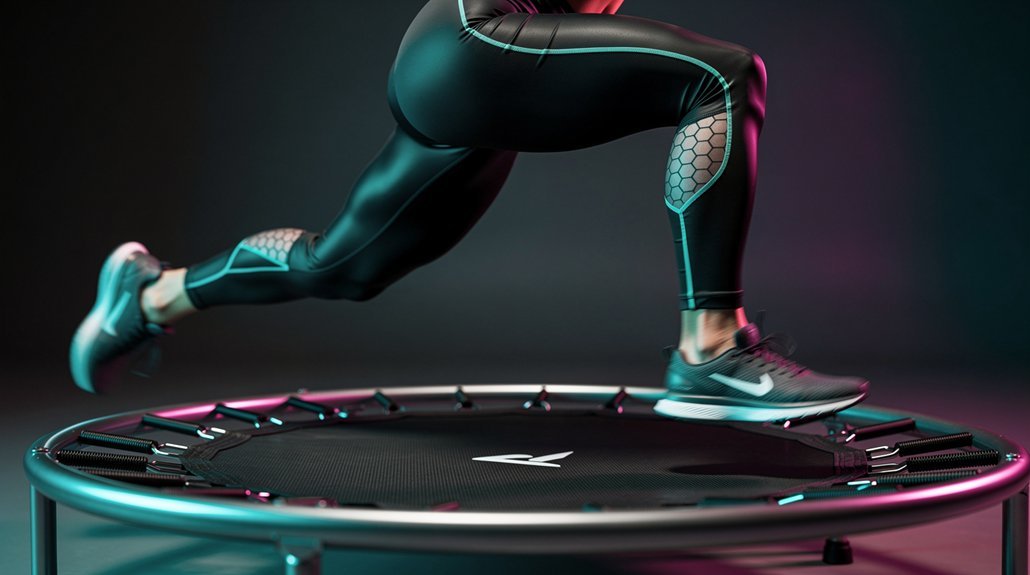
You’re probably wondering how a single pair of leggings can actually boost your rebounder performance. The right blend of 20–30 mmHg graduated compression, seamless four‑way stretch, and moisture‑wicking fabric can keep your muscles stable and cool during those high‑impact drills. But not every design delivers uniform pressure or prevents slipping when you jump. The next section breaks down the key features you need to evaluate before you commit to a brand.
| Women’s One-Leg Compression Tights Sports Base Layer |  | Best Overall | Design Style: One‑leg, non‑symmetrical, no fly | Fabric Composition: Polyester & spandex | Stretch Capability: 4‑way stretch | CHECK ON AMAZON | Read Our Analysis |
More Details on Our Top Picks
Women’s One-Leg Compression Tights Sports Base Layer
Looking for a base layer that hugs your muscles while letting you move freely on the rebounder? You’ll love the Women’s One‑Leg Compression Tights, a single‑leg design with a bold, asymmetrical look and 4‑way stretch that follows every stride. Made from polyester‑spandex, they feel ultra‑soft, breathe, and wick sweat fast, keeping you comfortable through intense sessions. The high‑performance compression stabilizes and supports active muscles, shaping your body and protecting against fatigue. Stretchy mobility lets you sprint, jump, or pivot without restriction, making them perfect for basketball, running, skiing, triathlons, or tactical drills.
- Design Style:One‑leg, non‑symmetrical, no fly
- Fabric Composition:Polyester & spandex
- Stretch Capability:4‑way stretch
- Compression Level:High‑performance muscle compression
- Moisture Management:Breathable, quick‑wick
- Activity Suitability:Sports, outdoor, military/tactical use
- Additional Feature:Non‑symmetrical design
- Additional Feature:No fly on pants
- Additional Feature:Military‑tactical use
Factors to Consider When Choosing Compression Leggings for Rebounder Workouts
When choosing compression leggings for rebounder workouts, you’ll want the right compression level to support your muscles without restricting movement. Look for breathable fabric and a seamless design that lets you stay cool while maintaining a full range of stretch. Also, check that the muscular support aligns with your body’s natural motion for optimum performance.
Compression Level Adequacy
What compression level should you pick for rebounder workouts? Aim for a graduated range around 20–30 mmHg. That level gives solid muscle support while letting you move freely during jumps and landings. If you stick to lighter routines, 15–20 mmHg can boost circulation, but it won’t stabilize high‑impact muscles as well. Avoid anything above 30 mmHg unless a clinician has advised it—those medical‑grade pressures can feel restrictive and hinder your agility. Check that the leggings deliver uniform pressure from calves to thighs; uneven compression creates weak spots that compromise performance. Finally, look for documented testing or labeling that confirms the compression holds up under repetitive impact, so the leggings stay effective throughout extended rebound sessions.
Fabric Breathability Rating
How important is breathability when you’re bouncing on a rebounder? You need a fabric that lets air flow and moisture escape, so you stay cool and dry. Look for a high breathability rating—often expressed in grams per square meter or UPF‑related metrics—because it tells you how much air can permeate the material. A good rating means the leggings move sweat away from your skin and evaporate quickly, preventing overheating while still delivering compression support. When comparing options, focus on standardized ratings rather than marketing buzz. Choose leggings that balance airflow with firm support, ensuring your muscles stay supported without feeling clammy or overheated during intense rebounder sessions.
Stretch and Mobility Range
Ever wondered why some leggings feel restrictive while others glide with every jump? You’ll notice that 4‑way stretch fabric is key; it lets you bend, squat, and rebound without tugging. Look for material that keeps its elasticity after countless jumps, so it won’t thin out or bag. A seamless, wide waistband should move with your hips and knees, not pin them. Ergonomic, form‑fitting cuts follow your body’s lines, preventing sag or bunching when you bounce. Choose breathable, moisture‑wicking fibers that stay stretchy even as you sweat, preserving full range of motion throughout intense routines. These details ensure each rep feels fluid, not confined, letting you focus on power and flow.
Muscular Support Alignment
Why does proper muscular support alignment matter when you rebound? It stabilizes your thighs, glutes, and calves, letting you jump and land with confidence. Look for leggings that use graduated pressure to lock those muscle groups in place, reducing knee wobble and ankle instability on the rebound surface. An ergonomic, contoured fit keeps your leg joints aligned, while four‑way stretch fabric delivers uniform compression throughout dynamic movements. Choose breathable, moisture‑wicking material so sweat won’t cause slip, which could throw off your alignment mid‑session. Finally, check the compression rating—often expressed in mmHg—to ensure it’s strong enough for support yet comfortable for long, continuous rebound cycles. This combination maximizes performance and safety.
Seamless Design Benefits
Ever notice how a seamless legging feels like a second skin when you’re bouncing on a rebounder? You’ll feel chafing disappear because there are no exposed seams to rub your skin. The design lets you jump, land, and pivot without edge distractions, giving you full range of motion. Because pressure points are gone, compression stays even from hip to ankle, boosting muscle support during each rebound. Seamless construction usually pairs with 4‑way stretch fabric, so the fit stays smooth and contoured even as you execute deep knee bends or rapid decelerations. Your knees and ankles stay free of digging seams, letting you focus on power and stability instead of irritation. This combination of comfort and consistent compression makes seamless leggings a smart choice for rebounder workouts.
Moisture‑Wicking Efficiency
How well your leggings pull sweat away from your skin can make or break a rebounder session. You’ll want a fabric that wicks moisture fast—typically a polyester‑spandex blend with a specialized finish. Look for a high wicking rate, meaning sweat moves from your skin to the outer surface within seconds, and a dry‑feel lasting through intense jumps. Breathability matters too; the material should let air circulate while evacuating sweat, preventing cling and discomfort. Consistent wicking reduces skin irritation and chafing, because sweat never pools inside the garment during repeated impacts. Choose leggings that balance compression with these moisture‑management properties, and you’ll stay dry, comfortable, and focused on every rebound.
Activity‑Specific Fit Features
Even with perfect moisture‑wicking, the leggings still need to move with you during every bounce. Look for a snug, flexible fit that mirrors rebounder motions, so the fabric slides with each impact instead of restricting you. Ergonomic paneling and strategically placed seams should support rapid jumps and direction changes while preventing chafing. Targeted compression or tapering around the calf, quadriceps, and glutes stabilizes those muscles during plyometric bursts. Choose four‑way‑stretch, breathable fabrics that keep warmth without overheating. Make sure the length clears the rebounder frame and that the cuff grip stays firm without squeezing the knee or ankle. These fit features let you focus on power and precision, not on adjusting your gear.
Frequently Asked Questions
Do Compression Leggings Affect Rebounder Bounce Height?
Yes, compression leggings can slightly boost your rebounder bounce height by supporting muscles and reducing fatigue, but the effect’s modest; proper technique and footwear matter far more than the leggings alone.
Can I Wear Compression Leggings Under a Knee Brace?
Yes, you can wear compression leggings under a knee brace; they’ll stay snug, reduce friction, and keep the brace stable, as long as the leggings aren’t too thick to interfere with fit.
Are There Eco‑Friendly Materials Used in These Leggings?
Yes, many brands now use recycled polyester, organic bamboo, and Tencel fibers in their compression leggings. You’ll find these eco‑friendly options still provide support, moisture‑wicking, and durability for rebounder workouts.
How Do I Prevent Chafing During High‑Intensity Rebounder Sessions?
You prevent chafing by choosing seamless, moisture‑wicking leggings, applying anti‑chafe balm to friction points, keeping skin dry, and adjusting strap tension so nothing rubs or bunches during high‑intensity rebounder sessions.
Do Compression Leggings Have Built‑In Pockets for Small Items?
Yes, most compression leggings you’ll find today include discreet zip or slip‑on pockets for keys, cards, or gels, so you can keep essentials close without bulging or losing focus during intense workouts.

Leave a Reply