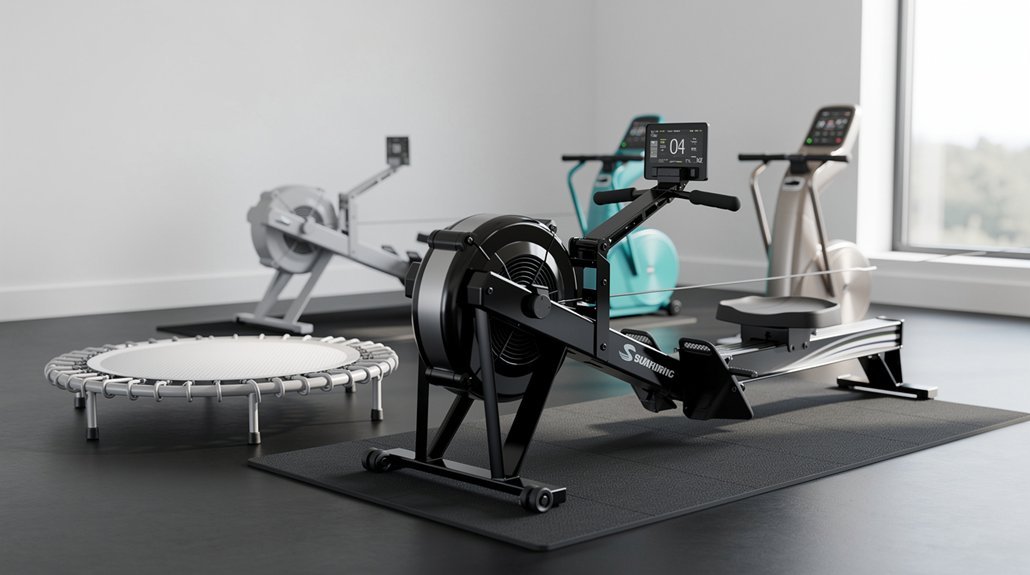
You’re looking for a rowing machine that fits beside your rebounder without hogging space, yet still delivers a solid, full‑body workout. Imagine a foldable frame that holds up to 350 lb, offers 16 magnetic resistance levels, and syncs with popular fitness apps—all while staying whisper‑quiet. The right pick can boost your cardio routine, save room, and even track progress, but the nuances between models matter. Let’s break down the top five options and what sets each apart.
| Foldable Home Rowing Machine 350lb 16 Levels App Support |  | Powerhouse Performer | Resistance Type: Magnetic | Resistance Levels: 16 | Weight Capacity: 350 lb | CHECK ON AMAZON | Read Our Analysis |
| YOSUDA Magnetic Rowing Machine with Bluetooth App Support | 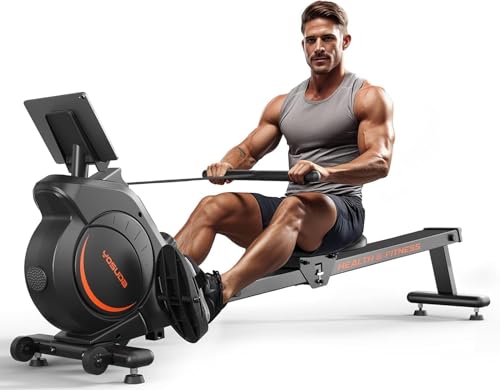 | Compact Contender | Resistance Type: Magnetic | Resistance Levels: 12‑level (flywheel) | Weight Capacity: 350 lb | CHECK ON AMAZON | Read Our Analysis |
| MERACH Magnetic Rowing Machine 16 Levels 350lb Capacity |  | Versatile Trainer | Resistance Type: Magnetic | Resistance Levels: 16 | Weight Capacity: 350 lb | CHECK ON AMAZON | Read Our Analysis |
| Sunny Health Compact Rowing Machine – 12‑Level Resistance |  | Space‑Saving Essential | Resistance Type: Hydraulic | Resistance Levels: 12 | Weight Capacity: Not specified (standard) | CHECK ON AMAZON | Read Our Analysis |
| Concept2 RowErg Indoor Rowing Machine with PM5 Monitor |  | Pro‑Level Classic | Resistance Type: Air | Resistance Levels: Variable (air) | Weight Capacity: 500 lb | CHECK ON AMAZON | Read Our Analysis |
More Details on Our Top Picks
Foldable Home Rowing Machine 350lb 16 Levels App Support
If you need a compact, powerhouse rower that fits a small apartment yet supports intense workouts, the YPOO Foldable Home Rowing Machine is the perfect match. Its 350 lb capacity and 16 magnetic tension levels deliver up to 99 lb resistance while staying under 25 dB, so you can sprint without disturbing neighbors. The 6.5 % incline mimics hills, boosting calorie burn. A 46‑inch dual‑slide rail and textured handle ensure smooth, full‑body motion, and adjustable foot straps keep you secure. The LCD monitor tracks time, SPM, distance, calories, and count, and the YPOOFIT/Kinomap apps add guided sessions. We vertically, saving over 70 % of space, and wheels let you roll it anywhere. Assembly is DIY‑friendly, and the heavy‑duty steel frame guarantees durability.
- Resistance Type:Magnetic
- Resistance Levels:16
- Weight Capacity:350 lb
- App Compatibility:YPOOFIT, Kinomap
- Foldable/Storage:Foldable, vertical storage
- Footprint (Approx. Dimensions):65 L × 17.7 W × 23.6 H in
- Additional Feature:6.5% incline design
- Additional Feature:Built‑in water bottle holder
- Additional Feature:Transport wheels for mobility
YOSUDA Magnetic Rowing Machine with Bluetooth App Support
The YOSUDA Magnetic Rowing Machine with Bluetooth App Support is perfect for anyone who wants a quiet, sturdy rower that syncs effortlessly with their favorite fitness apps—whether you’re a beginner setting up a home gym or an athlete looking for precise data. Its 12‑lb flywheel and Dual Silent System deliver smooth, virtually silent resistance, while the 5 mm‑thick steel frame supports up to 350 lb. A 3.45‑inch LCD shows stroke rate, time, and calories, and the phone holder lets you stream videos or music. You’ll love the compact footprint, upright storage that saves 70 % space, and two wheels for easy moving. Assembly takes about 25 minutes with a QR‑code video guide, and support replies within 24 hours.
- Resistance Type:Magnetic
- Resistance Levels:12‑level (flywheel)
- Weight Capacity:350 lb
- App Compatibility:Bluetooth app (unspecified)
- Foldable/Storage:Upright storage, 70 % space saved
- Footprint (Approx. Dimensions):Not specified (compact)
- Additional Feature:12‑lb flywheel
- Additional Feature:44‑inch motion range
- Additional Feature:25‑minute assembly time
MERACH Magnetic Rowing Machine 16 Levels 350lb Capacity
Looking for a rowing machine that stays quiet while delivering a wide range of resistance? The MERACH Q1S offers 16 magnetic levels, a 350‑lb capacity, and dual slide rails that keep the seat stable even during intense strokes. Its 58.9‑lb frame rolls on built‑in wheels, fitting a 1.6 × 5.7 ft space and folding to 1.6 × 2.1 ft for storage. You’ll enjoy smooth, silent resistance and can sync workouts to the MERACH or KINOMAP apps, which display distance, calories, heart rate, and more. Assembly takes about 30 minutes, and a one‑year warranty backs the machine. Batteries are included for the display.
- Resistance Type:Magnetic
- Resistance Levels:16
- Weight Capacity:350 lb
- App Compatibility:MERACH, Kinomap
- Foldable/Storage:Upright storage, 70 % space saved
- Footprint (Approx. Dimensions):65 L × 19.3 W × 24.8 H in
- Additional Feature:Dual‑track slide rails
- Additional Feature:Pre‑assembled components
- Additional Feature:2 AAA batteries for display
Sunny Health Compact Rowing Machine – 12‑Level Resistance
Need compact, ever‑row a’re looking for a machine that fits small spaces without sacrificing a full‑body workout? The Sunny Health Compact Rowing Machine delivers that promise with 12 hydraulic resistance levels you tweak via a simple knob, targeting legs, glutes, back, arms, shoulders, and core. Weighing 22.4 lb, it slides between rooms or into a car, and assembles in under five minutes. Its alloy‑steel frame feels sturdy, yet the handle and seat glide almost silently, so you can stream shows or take calls. The built‑in phone holder and free SunnyFit app give you 1,000+ trainer‑led sessions, scenic tours, and progress tracking—no membership required.
- Resistance Type:Hydraulic
- Resistance Levels:12
- Weight Capacity:Not specified (standard)
- App Compatibility:SunnyFit
- Foldable/Storage:Compact, lightweight, easy to move
- Footprint (Approx. Dimensions):Compact, lightweight (22.4 lb)
- Additional Feature:Hydraulic resistance system
- Additional Feature:22.4 lb lightweight frame
- Additional Feature:5‑minute assembly
Concept2 RowErg Indoor Rowing Machine with PM5 Monitor
Seeking a rowing machine that delivers pro‑level performance while fitting into a home gym? The Concept2 RowErg with its PM5 monitor gives you that elite feel. Its aircraft‑grade aluminum front legs and steel rear legs keep the frame sturdy for users up to 500 lb, while the smooth‑flywheel and adjustable air resistance let you dial in intensity. You’ll appreciate the 14‑inch seat, caster wheels for easy moves, and quick‑disassembly for storage in a 9 × 4‑ft space. The PM5 draws power from the flywheel, offers Bluetooth/ANT+ for 40+ apps, and includes a device holder for your phone or tablet. You also get a five‑year frame warranty.
- Resistance Type:Air
- Resistance Levels:Variable (air)
- Weight Capacity:500 lb
- App Compatibility:40+ apps (Bluetooth/ANT+)
- Foldable/Storage:Separates into two pieces for storage
- Footprint (Approx. Dimensions):9 ft × 4 ft footprint (large)
- Additional Feature:Aircraft‑grade aluminum front legs
- Additional Feature:Separate storage pieces
- Additional Feature:5‑year frame warranty
Factors to Consider When Choosing Rowing Machines to Complement Rebounder Cardio
You’ll want to check the machine’s space capacity and footprint to ensure it fits your workout area without crowding the rebounder. Noise level and resistance type matter too—quiet operation keeps the space pleasant, and compatible resistance lets you match your cardio intensity. Finally, look for models that offer app integration and easy storage so you can track progress and stow it away when not in use.
Space Capacity Limits
Wondering how much room your rowing machine will actually take alongside a rebounder? You’ll need to check its floor footprint—typical dimensions hover around 65″ L × 17‑19″ W × 23‑25″ H. That size fits comfortably next to a standard rebounder, but you must also account for the rail width. Dual‑rail or 65″‑long rails add stability, preventing the machine from shifting during dynamic rebounder movements, so allow a few extra inches on each side. If space is tight, prioritize foldable or vertical‑storage models; they can shrink to about 30% of their use‑size, saving up to 70% of floor area. Built‑in transport wheels make repositioning easy, letting you slide the rower aside when you need the rebounder’s full range. Also, verify the max user weight—most machines support up to 350 lb, ensuring they’ll hold heavier users without compromising balance.
Noise Level Considerations
Even if your rowing machine fits the space next to the rebounder, a loud workout can disrupt the flow of your cardio session. You’ll want a model that stays quiet while you match the rebounder’s rhythm. Magnetic resistance rowers typically stay under 25 dB, so they blend into a living‑room setting without shouting. Hydraulic units can get noisy when you crank up the pull, especially at high tension, so they’re better for lighter sessions. Air‑resistance machines generate a whoosh from the fast‑spinning flywheel, which can echo during sprint intervals. Look for dual‑rail frames or built‑in vibration dampers; they lock the chassis and cut rattles. Finally, stick to app‑guided workouts that keep your strokes steady, avoiding sudden bursts that spike noise.
Resistance Type Compatibility
Magnetic resistance delivers smooth, quiet tension that pairs well with rebounder cardio, especially in apartment settings where noise matters. When you compare resistance types, think about consistency and how it meshes with your bounce‑based intervals. Magnetic systems give a steady, predictable drag, letting you fine‑tune effort across the 12‑16 level range without sudden spikes. Hydraulic units can feel jerky; fluid pressure changes may disrupt the rhythm you build on the rebounder. Air‑based rowers ramp up resistance as you pull faster, which can be great for high‑intensity bursts but may clash with the controlled cadence you aim for. Also, check whether the console logs metrics—like watts or stroke power—that align with your rebounder goals, ensuring both machines track progress cohesively.
Footprint & Storage Needs
A compact footprint is essential when you’re sharing a room with a rebounder, and most modern rowers stay within a 65‑70‑inch length and 17‑20‑inch width. When you need to store the machine, look for foldable or vertical‑storage designs; they can shrink the unit by more than 70 % when not in use. Built‑in transport wheels let you roll the rower from the workout zone to a closet or garage without hassle. Some models even specify a tiny upright footprint, which helps you keep the rebounder’s bounce area clear. Dual‑rail or dual‑track frames add stability while preserving a narrow width, so you won’t sacrifice floor space. Prioritising these storage features ensures your cardio corner stays functional and uncluttered.
App Integration Features
Looking for a rowing machine that seamlessly syncs with your favorite fitness apps? Choose a model that supports dedicated platforms like the MERACH App, YPOOFIT, or Kinomap, giving you guided workouts and real‑time stats. Verify the app delivers structured programs, virtual training, and syncs key metrics—time, distance, calories, speed, cadence—so you can track progress across sessions. Make sure Bluetooth or ANT+ links let you pair a heart‑rate monitor and share data with other devices. Prioritize machines offering video‑guided courses inside the app; they keep motivation high while you pair rebounder cardio. Finally, check that the app updates regularly, runs stably, and includes QR‑code setup videos or clear manuals for hassle‑free integration.
Adjustable Ergonomics
Ever wonder how a rowing machine’s ergonomic tweaks can keep you comfortable while you pair it with rebounder cardio? You’ll want seat height and depth that match your leg length, so you can fully extend without straining hips. Adjustable foot‑rest straps and pivoting pedals let you lock your feet securely, whether you favor a fast, aggressive stroke or a relaxed pace. Look for a handle that moves up and down or tilts, keeping wrists neutral and shoulders relaxed as intensity shifts. A longer rail offers a smoother slide for taller users, while a contoured seat with variable padding maintains pelvic stability and eases perineal pressure during long sessions. Fine‑tuning these elements reduces fatigue, letting you focus on the cardio synergy.
Durability & Warranty Terms
While ergonomic tweaks keep you comfortable, the machine’s durability determines how long those adjustments stay effective. Look for a maximum user weight capacity of at least 350 lb; that rating usually means a sturdy frame built for repeated, high‑intensity rowing sessions. Dual‑rail or dual‑track designs—like the MERACH Q1S—add stability, which is essential when you pair the rower with rebounder cardio. Choose all‑metal or high‑density steel frames (5 mm or alloy steel) to minimize flex and extend lifespan. If you need to stash it away, a foldable design protects components and reduces wear from improper storage. Finally, compare warranty lengths: a 1‑year warranty (MERACH) signals basic coverage, while a 5‑year frame warranty (Concept2) reflects strong manufacturer confidence in long‑term durability.
Frequently Asked Questions
How Does Rowing Impact Knee Joint Health During Rebounder Workouts?
You’ll find rowing eases knee stress during rebounder workouts by engaging the hips and core, reducing direct impact; it strengthens surrounding muscles, improves joint stability, and promotes smoother, low‑impact movement.
Can I Use a Rowing Machine While Watching TV Without Motion Interference?
Yes, you can row while watching TV; just set the resistance low, keep the monitor at eye level, and use a stable, quiet machine so the screen stays steady and you stay focused.
What Is the Optimal Rowing Stroke Rate for Cardio Complementarity?
You should aim for 24‑28 strokes per minute; this pace balances aerobic intensity and efficiency, letting you maintain steady heart‑rate zones while preserving proper form and minimizing fatigue.
Do Rowing Machines Require Special Flooring to Protect Home Surfaces?
You don’t need special flooring, but you should place a protective mat or rubber tiles under the rowing machine to absorb vibrations, prevent scratches, and keep the surface stable during intense workouts.
Is There a Recommended Warm‑Up Routine Before Alternating Rowing and Rebounder Sessions?
You should start with five minutes of light cardio—jog in place or jump rope—followed by dynamic stretches for hips, shoulders, and hamstrings, then do two minutes of easy rowing before the interval work.