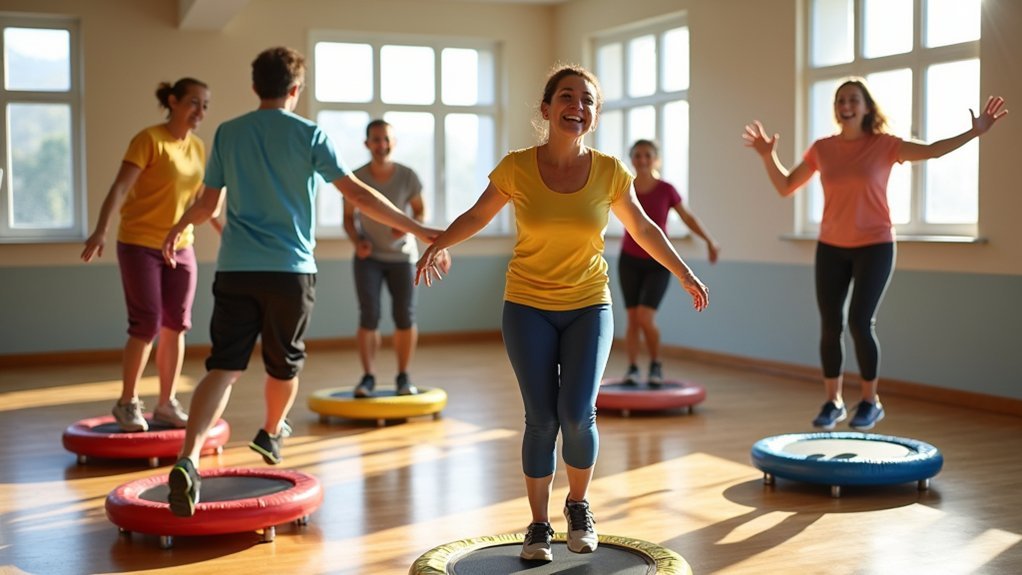
Mini-trampolining offers MS patients multiple benefits: it improves balance and coordination through gentle rebounding, reduces muscle spasticity, builds core strength without excessive fatigue, boosts cardiovascular health with low-impact movement, stimulates neurological pathways for better mobility, elevates mood, and decreases anxiety through endorphin production. You’ll experience both physical and mental health improvements while enjoying an exercise that’s accessible even on challenging days. Discover how this simple activity can transform your MS management approach.
7 Ways Mini-Trampolining Helps Multiple Sclerosis Patients

While many exercise options exist for individuals with multiple sclerosis, mini-trampolining stands out as an exceptionally beneficial activity. This low-impact exercise can dramatically improve your dynamic balance, with research showing significant improvements after just eight weeks of consistent practice.
When you’re bouncing gently on a mini-trampoline, you’re simultaneously reducing muscle stiffness and enhancing your range of motion without stressing your joints.
You’ll likely notice improved cardiovascular endurance and increased energy levels with regular sessions.
Mini-trampolining also strengthens neuromuscular coordination, critical for preventing falls and maintaining independence.
Perhaps most empowering is that you can conduct these workouts on your own terms, gradually building confidence as your balance improves. This self-directed approach to fitness can be particularly valuable when managing MS symptoms.
Improves Balance and Coordination Through Gentle Rebounding
Balance challenges remain a primary concern for those living with MS, making the gentle rebounding action of mini-trampolining particularly valuable.
When you practice these low-impact exercises regularly, you’re simultaneously engaging multiple muscle groups and enhancing your neuromuscular coordination.
Research shows that this rebound therapy markedly improves both static and dynamic balance, with participants demonstrating measurable progress in balance assessments.
You’ll appreciate how mini-trampolining creates a safe environment to practice balance skills while minimizing injury risks due to its low-impact nature.
You’ll likely notice relief from muscle stiffness and improved range of motion with consistent use.
These benefits contribute directly to better overall coordination, enhancing your independence and quality of life while managing MS symptoms.
Reduces Muscle Spasticity and Joint Stiffness
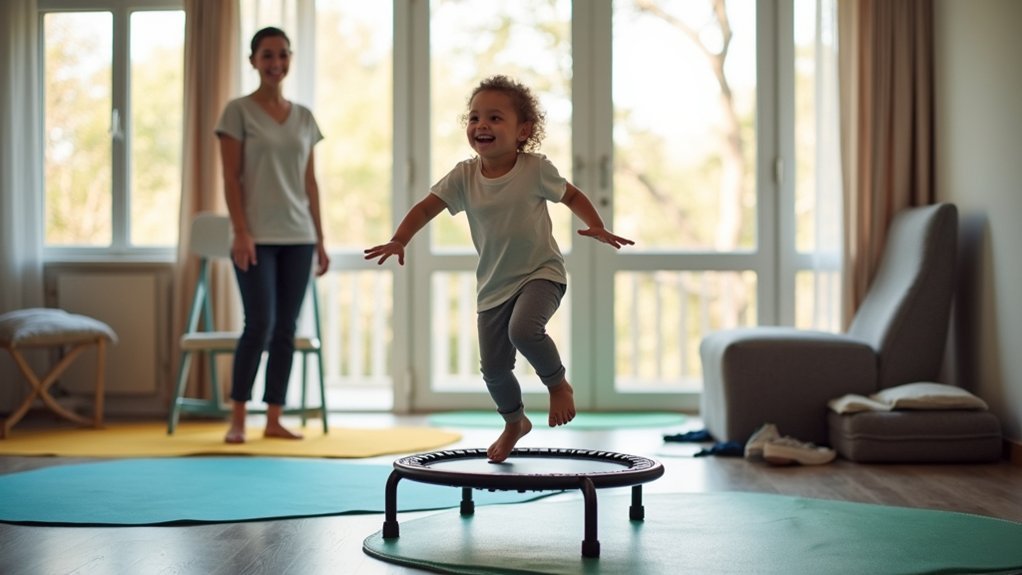
For many MS patients, muscle spasticity and joint stiffness create daily challenges that limit mobility and increase discomfort. Mini-trampolining offers a solution through its gentle, rhythmic bouncing motion that enhances blood circulation throughout your body.
| Benefit | How It Helps You |
|---|---|
| Improved Circulation | Reduces muscle spasticity through increased blood flow |
| Rhythmic Movement | Relaxes tight muscles and enhances flexibility |
| Low-Impact Exercise | Minimizes strain while encouraging joint movement |
| Consistent Therapy | Leads to measurable improvements in muscle tone |
| Enjoyable Activity | Increases likelihood of regular participation |
When you bounce on a mini-trampoline, you’re engaging in a form of rebound therapy that works specifically to alleviate stiffness. The gentle impact encourages your joints to move more freely while simultaneously relaxing tense muscles, making daily activities less painful and more manageable.
Enhances Core Strength Without Excessive Fatigue
Living with MS often means carefully balancing exercise benefits against potential fatigue, which makes mini-trampolining an ideal core-strengthening option.
The gentle bouncing motion engages your abdominal and back muscles without overtaxing them, allowing you to build core strength sustainably.
The low impact nature of mini-trampolining protects your joints while still providing an effective workout.
Studies show impressive results—participants increased their sit-up repetitions from 22 to 28 after just three days of consistent trampoline exercise.
You’ll find you can gradually increase your workout intensity as your body adapts, helping you manage energy levels while still making progress.
Many MS patients incorporate mini-trampolining into their warm-up routines, reducing spasticity before shifting to other exercises—all while maintaining core engagement throughout their workout session.
Boosts Cardiovascular Health With Low-Impact Exercise
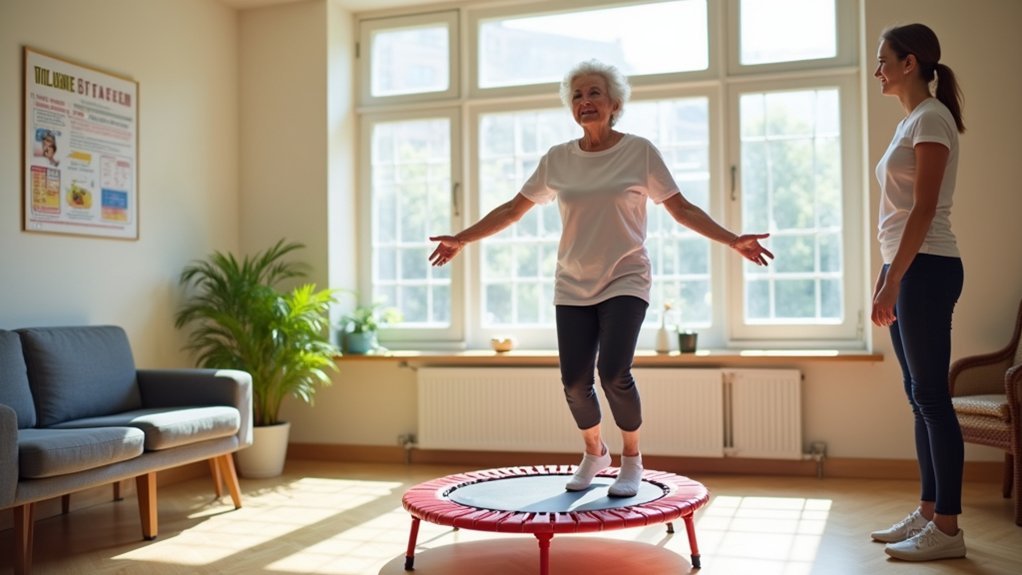
Mini-trampolining offers you a safe way to prevent cardiovascular deconditioning while living with MS, as the gentle bouncing motion improves blood flow throughout your body without stressing your joints.
You’ll experience beneficial heart-rate elevation during these low-impact sessions, helping maintain cardiovascular fitness despite mobility challenges.
The rhythmic nature of trampoline exercise strengthens your heart muscle and vascular system, making it an ideal cardiovascular option for managing MS symptoms.
Prevents Deconditioning Safely
Individuals with multiple sclerosis often face a challenging paradox: while regular exercise is essential to prevent deconditioning, many traditional workouts can exacerbate symptoms or increase injury risk.
Mini-trampolining offers a safe solution for preventing deconditioning in MS patients. You’ll maintain fitness without risking joint stress or triggering symptom flares. The gentle bouncing motion engages multiple muscle groups simultaneously, helping you preserve strength and mobility.
| Benefits | For MS Patients |
|---|---|
| Maintains muscle mass | Without excessive strain |
| Preserves cardiovascular fitness | Through adjustable intensity |
| Supports mobility | With minimal fatigue risk |
| Enhances quality of life | Through accessible exercise |
Regular sessions on a mini-trampoline can help you combat the physical decline that often accompanies MS, keeping you active and independent longer.
Improves Blood Flow
The gentle bouncing motion of mini-trampolining triggers a remarkable boost in circulation throughout your body. This rhythmic bouncing enhances how efficiently oxygen and nutrients travel through your bloodstream—particularly valuable if you’re battling MS-related fatigue or circulation issues.
As a low-impact cardiovascular workout, mini-trampolining improves blood flow without stressing your joints, making it ideal for managing MS symptoms. You’ll experience increased VO2max and better aerobic capacity with regular exercise on the mini-trampoline, strengthening your heart while reducing muscle stiffness and spasticity.
The enjoyable nature of rebounding encourages consistency, which is vital for maintaining long-term cardiovascular health. By committing to mini-trampolining sessions, you’re supporting your circulatory system and potentially reducing the severity of your MS symptoms through enhanced blood circulation.
Heart-Rate Elevation Benefits
Achieving an elevated heart rate without taxing your joints represents one of mini-trampolining’s greatest advantages for MS management.
When you bounce gently on a mini-trampoline, you’ll experience cardiovascular benefits similar to more strenuous exercises but without the harmful impact on your knees and ankles.
Your heart-rate elevation benefits extend beyond the workout itself. Regular sessions help improve your cardiovascular endurance and enhance your VO2max—a critical indicator of aerobic fitness.
This improved heart efficiency means your body delivers oxygen more effectively to muscles, directly addressing the fatigue that commonly affects MS patients.
You’ll also burn calories efficiently during these sessions, supporting weight management goals without risking injury.
The gentle bouncing simultaneously stimulates circulation, providing relief from muscle stiffness while strengthening your heart.
Stimulates Neurological Pathways for Better Mobility
While conventional therapy approaches often plateau, mini-trampolining provides unique neurological stimulation that can revolutionize mobility for MS patients.
When you bounce on a mini-trampoline, you’re activating multiple muscle groups simultaneously in a coordinated pattern that strengthens neurological pathways affected by MS.
The gentle rebounding motion engages your proprioceptive system, enhancing your spatial awareness and balance. You’ll notice improvements in both static and dynamic balance as your brain forms new connections to compensate for MS-related damage.
The low-impact nature of trampolining reduces muscle spasticity while increasing range of motion, making everyday movements more fluid and controlled.
Regular sessions on a mini-trampoline can help you regain functional abilities by stimulating neural adaptation, ultimately leading to greater independence and confidence in your mobility.
Elevates Mood and Decreases MS-Related Anxiety
Mini-trampolining triggers your brain to release mood-boosting endorphins while simultaneously lowering cortisol and other stress hormones that often plague MS patients.
You’ll experience the benefits of “mindful bouncing” as the rhythmic movement naturally guides your attention to the present moment, helping to break cycles of anxious thoughts.
The gentle rebounding motion creates a perfect balance of physical engagement and mental relaxation, offering you a therapeutic escape from MS-related worries without taxing your nervous system.
Endorphin Production Boost
Because physical activity naturally triggers the release of endorphins, bouncing on a mini-trampoline can greatly boost mood and reduce anxiety for MS patients. When you engage in just 10-15 minutes of mini-trampolining, your brain releases these “feel-good” chemicals, creating a natural high that counters the emotional challenges of MS.
| Bouncing Duration | Endorphin Effects |
|---|---|
| 5 minutes | Initial mood lift |
| 10 minutes | Anxiety reduction begins |
| 15 minutes | Serotonin release activated |
| 20 minutes | Meditative state achieved |
| 30 minutes | Maximum mental health outcomes |
The rhythmic nature of trampolining creates a meditative effect on your brain, promoting relaxation while simultaneously stimulating endorphin production. You’ll likely notice improved emotional resilience after incorporating regular sessions into your routine, helping you better manage MS-related mood fluctuations.
Stress Hormone Reduction
Beyond the endorphin boost, regular mini-trampolining directly combats the stress hormones that exacerbate MS symptoms.
Studies show that bouncing on a mini-trampoline considerably reduces cortisol levels in your bloodstream, the primary stress hormone that can intensify MS-related inflammation and discomfort.
This stress hormone reduction has a positive effect on your emotional wellbeing. As you bounce rhythmically, your body enters a more relaxed state, decreasing the anxiety that often accompanies living with MS.
You’ll likely feel more in control of your symptoms as perceived stress levels diminish.
The gentle, low-impact nature of trampolining creates a calming effect on your nervous system while simultaneously building resilience against daily stressors.
With consistent practice, you’ll develop better coping mechanisms for managing the psychological challenges of MS.
Mindful Bounce Benefits
While engaging in mindful bouncing, you’ll experience a profound shift in mood that directly counters MS-related anxiety. This happens because mini-trampolining triggers endorphin release—your body’s natural mood elevators—creating immediate emotional relief.
The rhythmic nature of bouncing creates a meditative effect, allowing you to focus entirely on your body’s movements rather than MS symptoms or worries. You’re practicing mindfulness with every bounce, creating a calming experience that reduces stress.
Research confirms these mindful bounce benefits extend beyond the session itself. Regular trampoline exercise enhances your overall mental well-being, improving self-esteem and body image.
Frequently Asked Questions
Does Rebounding Help MS?
Yes, rebounding helps MS. You’ll experience improved balance, increased muscle strength, and better range of motion. It’s a low-impact exercise that can boost your energy levels while safely addressing mobility limitations.
What Are the Benefits of a Mini Trampoline?
Mini trampolines help you improve cardiovascular health, balance, and coordination while strengthening your core muscles. They’re low-impact, making workouts easier on your joints, and they’ll boost your mood and mental well-being.
What Is the Best Exercise for Multiple Sclerosis Patients?
As an MS patient, you’ll benefit most from low-impact aerobic activities like swimming, water aerobics, yoga, and walking. These exercises improve mobility and strength while reducing fatigue without straining your joints or raising body temperature.
What Is 10 Minutes on a Rebounder Equivalent To?
Ten minutes on a rebounder equals about 30 minutes of jogging. You’ll get comparable cardiovascular benefits with less joint impact, burn 50-100 calories, and improve your muscle strength, coordination, balance, and stability.
In Summary
You’ve discovered how mini-trampolining offers unique benefits for your MS journey. By incorporating just 10-15 minutes of gentle rebounding into your routine, you’ll strengthen your core, improve your balance, and boost your mood—all while protecting your joints. Remember, start slowly and listen to your body. Always consult your healthcare provider before beginning, but don’t hesitate to bounce your way toward better MS management.