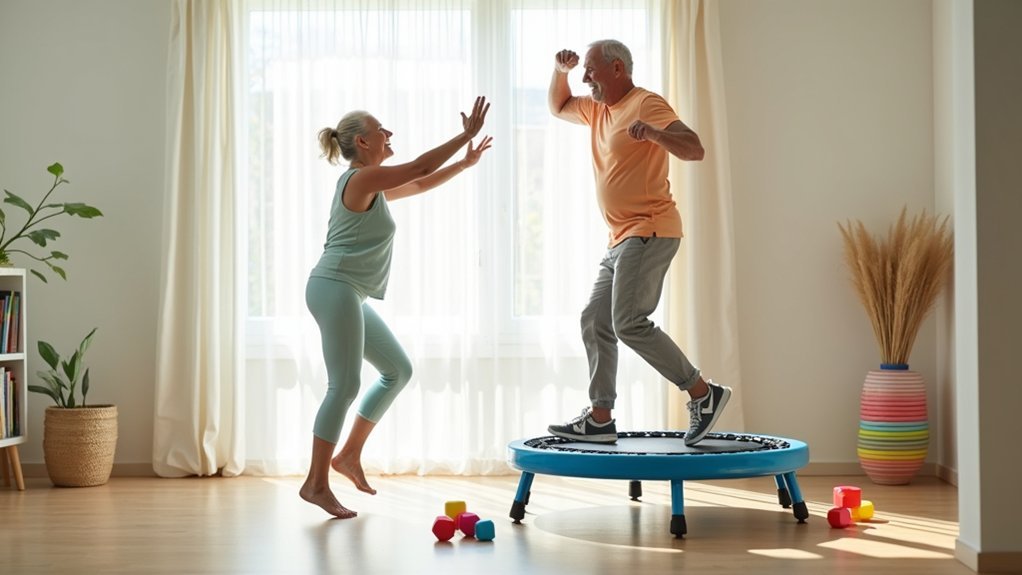
Mini-trampolines offer excellent low-impact workouts for seniors focusing on balance. Try the health bounce with soft knees and engaged core, seated stability drills to reduce fall risk, heel lifts to strengthen ankles, side-to-side weight shifts for oblique engagement, and one-leg stands to improve stability. Add balance aids like handles for safety when needed. Regular practice can enhance your balance by up to 35% in just 14 weeks. Discover how these five exercises can transform your stability and confidence.
Low-Impact Bouncing Workouts for Core Stability
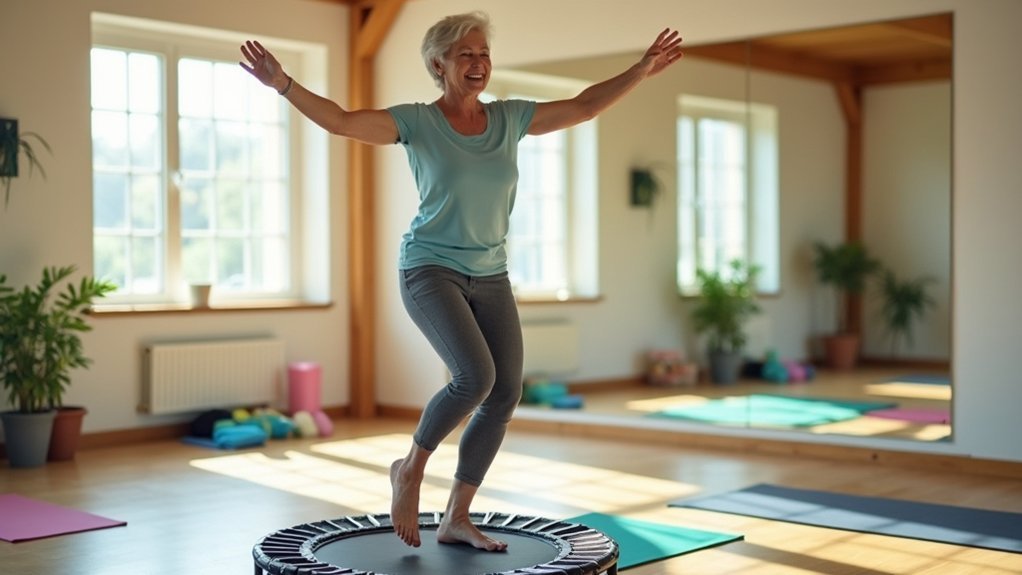
While many seniors avoid high-impact exercise, mini-trampoline workouts offer a gentle yet effective way to build core stability.
The basic health bounce creates an ideal foundation—just soften your knees, hinge slightly forward, and maintain a gentle bounce rhythm while engaging your core.
The health bounce establishes proper form—softened knees, slight forward hinge, rhythmic movement, and engaged core muscles.
For reduced fall risk, try seated stability drills. Simply sit on the rebounder with feet flat, lightly bounce, and engage your abdominals. Abdominal muscles engaged helps draw the navel back toward the spine for proper form. You can add arm movements or resistance bands as you progress.
For ankle strength, incorporate heel lifts and toe taps during your bounce routine.
Side-to-side weight shifting improves balance while targeting obliques and hip stabilizers. Start with small lateral steps before attempting larger shifts.
Always finish with cool-down stretches like seated spinal twists or gentle forward folds to integrate your core work.
Gentle Rebounding Routines for Confidence Building
A gentle rebounding routine offers the perfect entry point for seniors new to mini-trampoline workouts.
Begin with the health bounce—simply lifting your heels slightly while maintaining contact with the mat to warm up muscles and boost circulation.
As you build confidence, incorporate simple arm movements while keeping your feet planted.
Try the fixed position bounce to reduce fall risks while still engaging your core and improving balance.
Don’t hesitate to use balance bars, chairs, or worktops for support.
These aids enhance safety and allow you to focus on proper form rather than worrying about stability.
The ideal workout tempo follows a 120 beats per minute rhythm that helps maintain consistent, controlled movements during your rebounding session.
Remember to practice deep breathing between exercises and adjust your routine based on your comfort level.
Start with shorter sessions, gradually increasing duration as your endurance improves.
Balance-Enhancing Mini-Trampoline Exercises
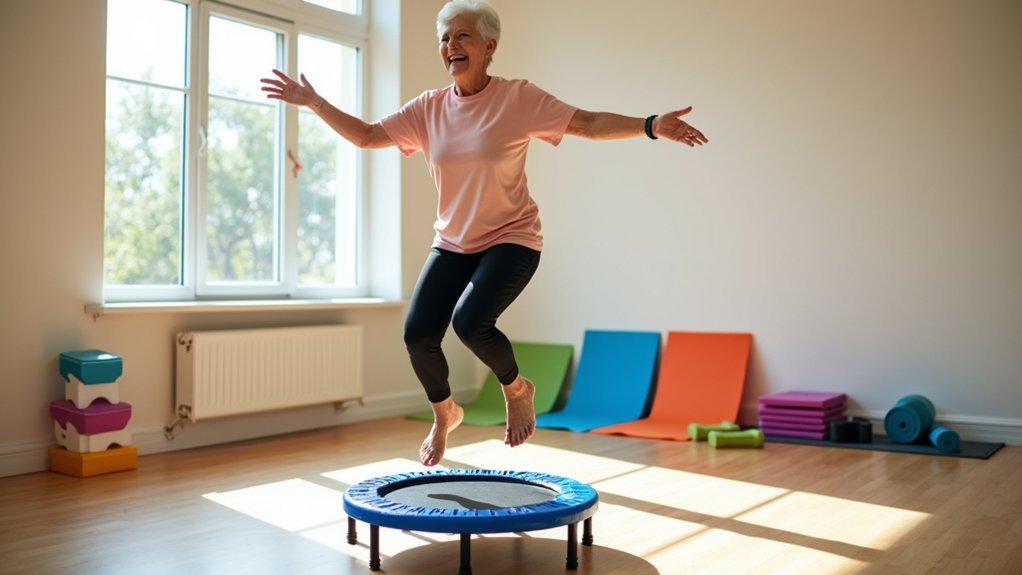
Balance improvement remains one of the most beneficial outcomes of mini-trampoline workouts for seniors. You’ll build stability through progressive challenges that engage your core stabilizers while maintaining joint safety.
Start with the basic one-leg stand, holding for 5 seconds before gradually increasing to 30 seconds. Incorporate toe touches to enhance dynamic balance—tap the front and sides of your trampoline while keeping arms outstretched for counterbalance. Marc Montemerlo recommends beginning with easy sway exercises to gradually build confidence and stability.
| Exercise | Benefit |
|---|---|
| Health Bounce | Improves lymphatic flow with 80% less impact |
| Balance March | Engages core stabilizers through rhythmic movement |
| Calf Raises | Strengthens ankle stability during gentle bounces |
| Eyes-Closed Practice | Heightens proprioceptive awareness (with support) |
| Mini-Squats | Activates glutes and quads for lower body strength |
Combine these exercises with controlled breathing and proper posture for maximum benefits.
Fall Prevention Techniques on the Rebounder
Preventing falls becomes notably more attainable when you incorporate mini-trampoline exercises into your fitness routine.
Regular rebounding for 12-14 weeks can greatly improve your ability to recover from forward falls by enhancing dynamic stability and hip movement control.
Consistent mini-trampoline training builds crucial stability skills that help your body automatically regain balance during unexpected forward motions.
When starting, always use a mini-trampoline with handles if you have balance concerns.
Practice standing on one leg while holding the handle, gradually reducing your grip as stability improves.
Focus on core-strengthening exercises to build the muscles essential for balance recovery.
For maximum benefit, combine your trampoline routine with other mobility exercises and gradually increase intensity as you gain confidence.
The low-impact nature of rebounding protects your joints while still effectively training the plantarflexor muscles vital for preventing falls.
Studies show that consistent mini-trampoline workouts can enhance balance in seniors by 35 percent after just 14 weeks of regular practice.
Progressive Strength Training Through Rebounding
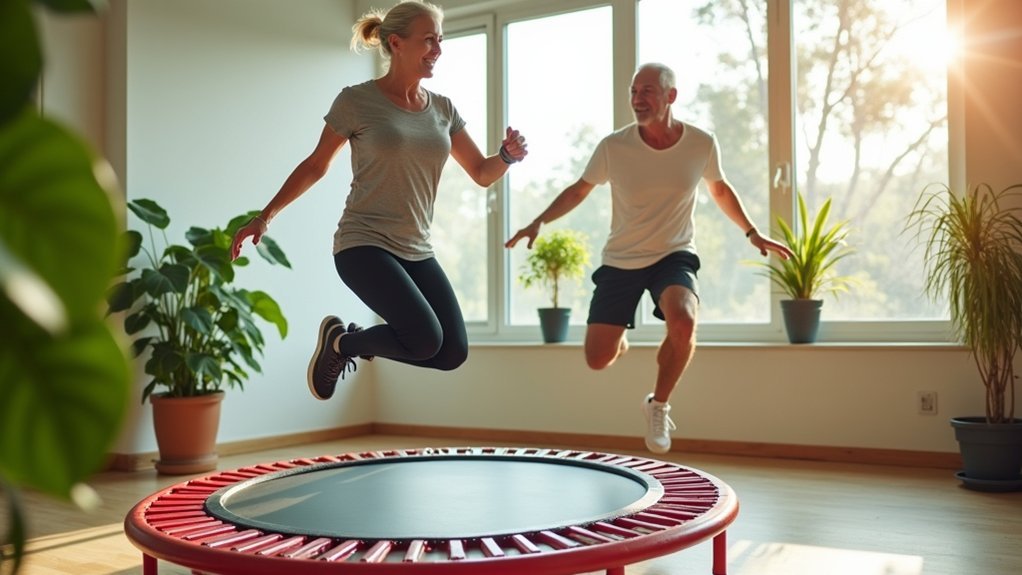
Progressive strength training on a mini-trampoline offers seniors a uniquely effective way to build muscle power while protecting vulnerable joints.
The unstable surface activates core, leg, and hip stabilizers, improving your body’s ability to respond to balance challenges.
Start with gentle bouncing to reduce joint stress while warming up muscles. As you gain confidence, gradually increase bounce height and session duration from 10 to 45 minutes over several weeks.
Target specific muscle groups with calf raises for ankle strength, torso rotations for core stability, and lateral steps for hip abductors—all essential for fall prevention.
Adding resistance bands to handles intensifies upper-body work while maintaining twice-weekly sessions of 45-60 minutes delivers best results.
The rebounder’s reduced ground reaction forces (20-40% less than hard surfaces) make it ideal for building strength without excessive impact.
Studies with post-menopausal women have demonstrated that rebounding can significantly improve bone mineral density while also addressing urinary incontinence issues.
Frequently Asked Questions
How Does Medication Timing Affect Safety During Mini-Trampoline Workouts?
Schedule your medications around workouts. Don’t exercise during peak effects of blood pressure meds, diuretics, or anticoagulants. Pain relievers might mask injuries if taken beforehand. Always consult your doctor about ideal timing windows.
Can Rebounding Exercises Interact With Balance-Affecting Health Conditions?
Yes, rebounding exercises can interact with your balance-affecting conditions. You’ll need to adapt workouts based on vestibular disorders, osteoporosis, or medication effects, but proper modification can actually improve your balance over time.
What Clothing and Footwear Are Best for Senior Rebounding?
Wear tight-fitting clothes like leggings or shorts to prevent catching on springs. Choose cross trainers with stiff midsoles for spring rebounders, or grip socks for bungee models. Always secure long hair and avoid loose accessories.
How Do Seasonal Changes Affect Indoor Rebounding Routines?
Seasonal changes affect your indoor rebounding routine through temperature fluctuations, lighting variations, and potential holiday disruptions. You’ll need to adjust room climate, lighting, and workout timing to maintain consistency and comfort year-round.
Can Mini-Trampoline Workouts Help With Cognitive Function?
Yes, you’ll experience cognitive improvements through mini-trampoline workouts. Research shows these exercises enhance attention and executive functions by engaging your brain while balancing, ultimately reducing cognitive task completion times, especially as you age.
In Summary
You’ve now got five effective mini-trampoline workouts that’ll improve your balance while being gentle on your joints. Start slowly, focusing on proper form before increasing intensity. Even just a few minutes daily will strengthen your core, improve your stability, and boost your confidence. Remember, it’s never too late to enhance your balance—your future self will thank you for taking these bouncy steps toward fall prevention today.